
 Devshot

Hi there, this is your daily ☕️ Devshot.
In today's Devshot:
🪟 Software bug caused Microsoft 365 outage
🔒 Apple curbs AI agents' access to your Mac
🟣 Microsoft releases .NET 11
🦆 DuckDB 2.0 ships, not production-ready
🦀 Rust turns on parallel compiler frontend
Plus: 🎁 7 more stories you might like, 🛠️ 5 tutorials, 🧰 6 tools, and 📚 5 papers.
From our partner
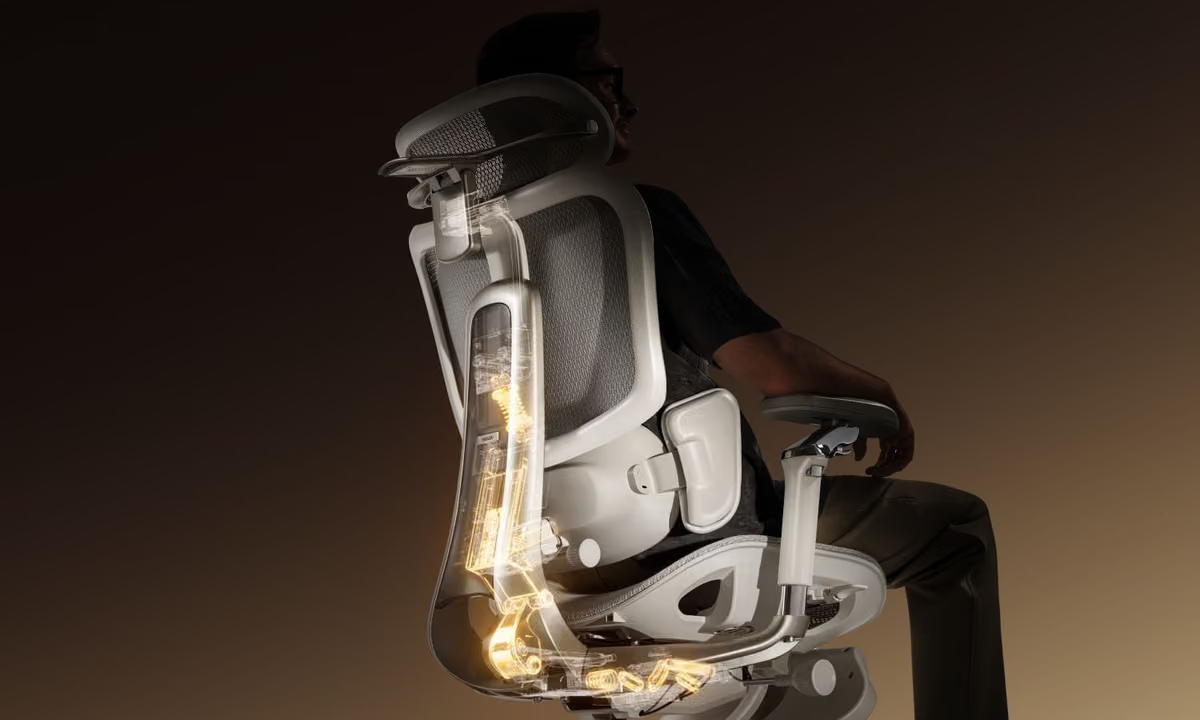
Coding isn't one static pose.
You lean in, sit upright on calls, then need a break.
The E3 Ultra (Gen5) Ergo Office Chair follows those shifts with its 4D headrest, 8D linked armrests, and 150° locking recline.
High-resilience mesh keeps airflow steady.
Currently $699 (Reg. $999).
Drop it to $639 with your exclusive code DEVSE3ULTRA .
Software bug caused Microsoft 365 outage LINK
- Microsoft blamed last week's worldwide Microsoft 365 outage on a software bug shipped in July, which crippled over 80% of its networking gateway servers and knocked out Outlook, Exchange Online, Teams, and Copilot for nearly 24 hours.
- The latent defect sat undetected for three months because load tests ran on weaker, fewer-core hardware than production; a Teams failover onto Exchange Online's infrastructure, plus ~14% of gateway capacity already offline, finally triggered it under heavy traffic.
- Servers that stopped responding got users redirected onto others that then failed too, and cross-region safeguards didn't contain the cascade; Microsoft has deployed a fix, added capacity and monitoring, with a final post-incident report expected later this week.
Apple curbs AI agents' access to your Mac LINK
- Apple's macOS 27.3 developer beta 2, released yesterday, adds granular controls that let users restrict which apps and folders AI automation tools can reach instead of handing over entire-disk access.
- The old Device Control and Data Access option splits into System & App Protection Override, which gates automation apps via entitlements, and Accessibility, while a new Menu Bar indicator flags when one app is controlling another.
- Full Disk Access stays and existing grants survive the update, but Apple warns developers to adjust onboarding so their apps handle being scoped to only a limited set of folders or apps.
Microsoft releases .NET 11 LINK
- Microsoft shipped .NET 11 last week alongside C# 15, F# 11, ASP.NET Core 11, .NET MAUI, and Entity Framework Core 11, a two-year Standard Term Support release that landed to coincide with this year's .NET Conf.
- C# 15 becomes the default language and adds union types with exhaustiveness-checked switch expressions, the CLI now starts via a Native AOT host, and the JIT removes more bounds checks while raising the x64 baseline requirement.
- ASP.NET Core 11 generates OpenAPI 3.2 documents by default, flagged as a breaking change, EF Core 11 requires .NET 11 and adds experimental SQL Server vector search, and both .NET 8 and .NET 9 reached end of support on November 10, 2026.
DuckDB 2.0 ships, not production-ready LINK
- DuckDB 2.0, codenamed Cinnamon Teal and released in October, is the analytical database's largest feature release in two-plus years, but its own team warns against running it in production until the bug-fixing 2.0.1 ships soon.
- The release earned its major version because new storage changes can make files unreadable by older versions, and it adds server-mode operation, faster queries, an extensible SQL parser on by default, and the Quack remote protocol as a first-class citizen.
- A dedicated Agent Mode helps coding tools like Claude Code, Codex, and Cursor fix their own SQL by emitting JSON-structured errors and compact Markdown tables shrunk to around 60-70% of normal size, with no hidden truncation and guardrails against runaway queries.
Rust turns on parallel compiler frontend LINK
- Rust has switched on its parallel compiler frontend by default on the nightly channel as of nightly-2026-11-14, bringing multithreading to type checking and borrow checking after years of it being opt-in, ahead of planned stabilization.
- Building a single crate from scratch with 8 frontend threads cut wall-time by roughly 40-44% for cargo check and clippy, making an end-to-end cargo check nearly 2x faster for crates like nalgebra, cargo, and diesel.
- Nightly defaults to a conservative 2 threads to surface bugs while limiting memory use; tune it via `--jobs-frontend`, but watch for non-deterministic diagnostic ordering and occasionally non-reproducible binaries, which the team treats as bugs to fix.
Tutorials & Advice
> Vaibhaav-Tiwari/deepseek-v3-jax: DeepSeek V3 (MLA, DeepSeekMoE, aux-loss-free balancing, MTP) in 190 lines of pure JAX, trained on a MacBook Air. Write-up: vaibhaav.in/writing/deepseek-v3-jax: Reimplements DeepSeek-V3's full architecture in 190 readable lines of pure JAX, trained on a MacBook Air, making the design understandable rather than production-ready.
> What does it mean to understand what we built?: Judge AI-built software by how the whole system actually behaves, not by reading its code line by line.
> How to Set Up a Python Project for Agentic Coding: Set up automated tests, linters, and consistent file structure so AI coding agents get fast feedback and guess less about your project's conventions.
> Build a multi-agent research app in React with TanStack AI: agents must pause for human approval, since it provides agent status, saved chats, and compaction out of the box.
> Staggering Scroll-Driven Animations with animation-range-start: Use the browser's built-in animation-range-start to stagger scroll-driven CSS animations with one line, instead of reinventing that feature with complex custom math.
Other news you might like
- Announcing kagent 1.0 GA LINK
- Throwing Out The Phonebook LINK
- HTML-in-Canvas - Chrome for Developers LINK
- Google says AI rewrote a video decoder and made it 20–30% faster in tests LINK
- A developer got DOOM to run on a USB flash drive, and file transfers are the controls LINK
- Qwik 2.0 RC: Replaces HTML Comment Markers for Faster Reactivity and Out-of-Order Streaming LINK
- Scheduling the removal of the kube-proxy IPVS backend LINK
Trending tools
beacon.sh: open-source persistent memory for AI coding agents, retaining context across sessions so they learn from past work instead of restarting each time LINK
Scalekit: connects AI agents to 30,000+ tools across 600+ apps through one MCP gateway, handling auth, scopes, and per-user permissions for production LINK
Inferock: a local proxy for OpenAI, Anthropic, Gemini, and OpenRouter that tracks token usage, failures, and retries to catch billing overcharges. LINK
Plurai Simulation: tests AI agents in a simulated environment, surfacing failures and feeding insights back so performance improves with each run LINK
OpenSwarm: an AI-first operating system where agent swarms run the machine, letting you orchestrate dozens of parallel tasks instead of working sequentially LINK
FastRouter.ai: routes requests across 200+ AI models through one OpenAI-compatible API, with smart routing, automatic failover, and cost controls for teams LINK
Trending papers & reports
AI coding-agent records can flip their own conclusions when data from different agents is lumped together, so adding context about each agent's source and workflow raises merge-prediction accuracy and prevents misleading business takeaways. LINK
Quantum software testing now reliably tells real bugs from hardware noise, keeping false alarms near 0.1% versus up to 74% for older methods, so teams can trust results on today's noisy quantum machines. LINK
Code speed-up assistant turns slow programs into faster ones by reusing a library of proven fix patterns, beating the best rival methods by up to ~13 points on how many programs it successfully optimizes. LINK
A3D dataset gives researchers 1,115 real software blueprints pulled from public GitHub and verified with industry tools, filling a gap that has blocked reliable studies of how teams reuse and check system designs. LINK
Model-driven DevOps research is mapped across every published study, finding most work targets cloud deployment and integration while no study yet offers a full process for modernizing existing systems, flagging a clear gap. LINK
See you tomorrow for a new dose of ☕️ Devshot!