
GitHub Copilot Review
The most widely deployed AI coding assistant, wired straight into GitHub, VS Code, and the tools engineers already live in. Excellent value at $10 a month, with a usage-based billing model that rewards reading the fine print.
GitHub Copilot is the default AI pair programmer for most engineering teams, and in 2026 it is a genuinely strong product rather than just the incumbent. Pricing is clear and cheap to start: a real Free tier at $0, Pro at $10 a month, Pro+ at $39 a month, Business at $19 per user per month, and Enterprise at $39 per user per month. Inline completions and next-edit suggestions are unlimited on every paid plan and cost nothing extra, while chat, agent mode, code review, and the CLI draw from a monthly allowance. The big 2026 change is billing: on June 1 GitHub swapped fixed premium-request quotas for token-metered AI Credits, so heavy agent users can now run over their included pool. The strongest reasons to buy are ecosystem depth and multi-model access: Claude, GPT, and Gemini in one subscription, first-class VS Code, JetBrains, Neovim, and Visual Studio support, plus Copilot on github.com and in the CLI. The catch is that it is best inside the GitHub and Microsoft world, chat quality swings with the model you pick, and it has historically felt less agentic than Cursor. The closest alternatives are Cursor, Windsurf, Amazon Q Developer, and Tabnine.
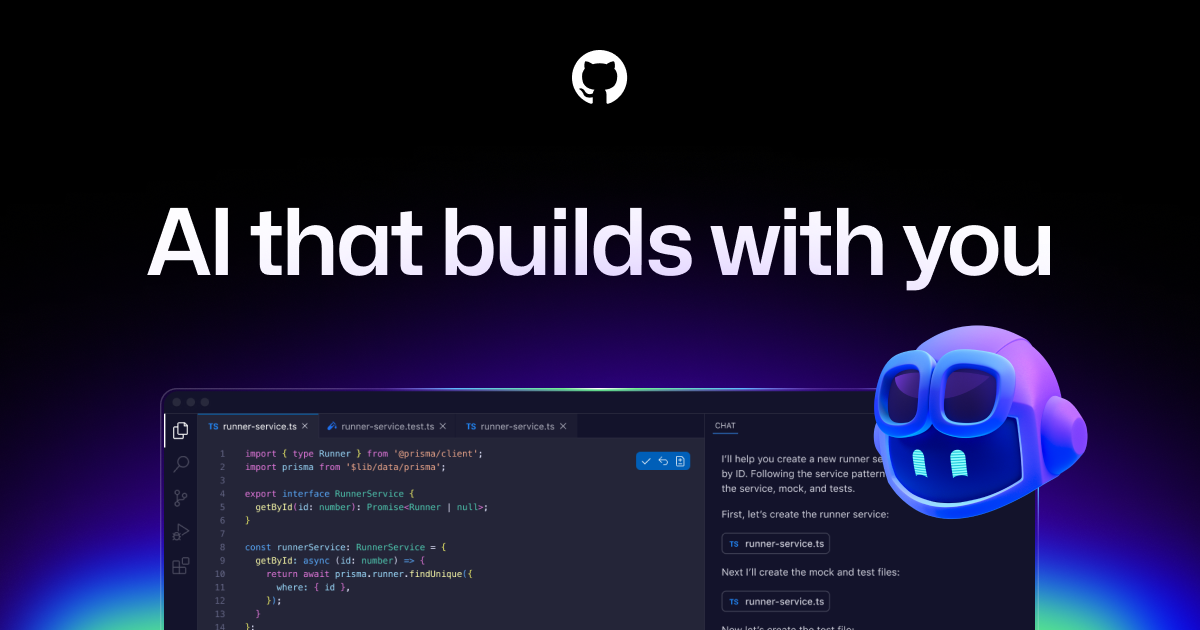
GitHub Copilot is the tool that made AI-assisted coding normal. It shipped as a technical preview in 2021, went general availability in 2022, and by 2026 it is used by millions of developers and a large share of the Fortune 500.
For most engineers the real question is no longer whether an AI assistant helps, because it does, but whether Copilot is still the right one now that Cursor, Windsurf, and Amazon Q have raised the bar on agentic coding.
This review is written for working software engineers and the leads who buy their tools.
We cover what Copilot actually is in 2026, how it fits into a real editing workflow, the model lineup, the premium-request and AI-credit billing that trips people up, what each plan costs, where Copilot is genuinely excellent, and where it falls short of the newer agent-first editors.
We also name four alternatives worth trying before you standardize a team on any one of them.
What is GitHub Copilot?
GitHub Copilot is an AI coding assistant built by GitHub, owned by Microsoft, that lives inside your editor and across the GitHub platform.
At its core it does three things: inline code completion that suggests the next line or whole function as you type, Copilot Chat for asking questions about code, generating snippets, and debugging in natural language, and agent mode, where Copilot plans a change, edits multiple files, runs commands, and iterates toward a goal you describe.
What separates it from a single-model tool is model choice. One subscription gives you access to several frontier models, including Anthropic Claude (Sonnet and, on higher tiers, Opus), OpenAI GPT, and Google Gemini, so you can pick a fast, cheap model for boilerplate and a stronger reasoning model for hard refactors.
Copilot runs in VS Code, Visual Studio, the JetBrains IDEs, Neovim, and Xcode, plus Copilot in the CLI for shell commands and Copilot on github.com for asking questions about a repo, reviewing pull requests, and assigning issues to the Copilot coding agent.
On the top plans it adds enterprise codebase indexing, so answers and completions are grounded in your organization's own code rather than generic training data.
How GitHub Copilot works
Day to day, most of the value is invisible. You type, and Copilot proposes greyed-out completions you accept with Tab. Next-edit suggestions predict the follow-on change across the file, which is where a lot of the real time savings hide.
None of this consumes your paid allowance, so the autocomplete you use hundreds of times a day is effectively free once you are on a paid plan.
The heavier features work differently. Copilot Chat opens a side panel where you reference files, symbols, or the whole workspace and ask for an explanation, a test, or a fix.
Agent mode takes a prompt like "add pagination to this endpoint and update the tests," then reads context, edits several files, runs the test suite, and shows you a diff to approve.
On github.com you can hand an issue to the Copilot coding agent, which spins up its own environment, pushes a branch, and opens a pull request for human review. Copilot code review can leave inline comments on PRs automatically.
The part engineers need to understand is metering. Completions are unlimited, but chat, agent runs, code review, and CLI requests draw from a monthly pool.
Historically that pool was counted in premium requests, and in June 2026 GitHub moved paid plans to token-based AI Credits, so a single long agent session on a large model can burn far more of your allowance than a quick chat.
Run out and you either stop, wait for the monthly reset, or pay overage. In practice this means picking the right model for the job is not just about quality, it is about cost.
GitHub Copilot key features
GitHub Copilot pricing
Copilot pricing is refreshingly public, which is rare in dev tooling. There are five tiers.
Free costs $0 and is a real plan, not a trial. You get around 2,000 code completions and roughly 50 chat messages a month, limited agent usage, and access to a smaller model set such as a Claude Haiku class model and a GPT mini model. It is enough to evaluate Copilot properly or to cover light personal use.
Pro is $10 a month, or $100 a year, and is the plan most individual engineers want.
Completions and chat are unlimited, you get agent mode, code review, and the full model picker including Claude Sonnet, GPT, and Gemini, and the plan includes a monthly premium allowance (historically 300 premium requests, now delivered as roughly $15 of included AI Credits under the 2026 token model). Students, teachers, and maintainers of popular open-source projects can get Pro free.
Pro+ is $39 a month, or $390 a year, and is aimed at heavy users. It carries a much larger allowance (historically 1,500 premium requests, roughly $70 of included credits) and adds access to premium models like Claude Opus.
Business is $19 per user per month, adding organization-wide policy management, license control, IP indemnity, and data protections, with about $19 of included AI Credits per seat.
Enterprise is $39 per user per month, adding Copilot on github.com, enterprise codebase indexing, knowledge bases, and about $39 of included credits per seat.
The thing to model before you commit is overage. Under the legacy premium-request system, extra requests were $0.04 each. Under the 2026 AI-credit model, premium usage is billed per token against a per-credit rate near $0.01, so a few developers running long agent sessions on the largest models can push a team past its included pool.
Inline completions never count, but budget for agent and chat usage if your team leans on them.
| Plan | Price | Best for |
|---|---|---|
| Free | $0 | ~2,000 completions, limited chat |
| Pro | $10 / mo ($100 / yr) | Unlimited completions and chat |
| Pro+ | $39 / mo ($390 / yr) | Larger allowance, premium models |
| Business | $19 / user / mo | Org policy and governance |
| Enterprise | $39 / user / mo | Codebase indexing, github.com |
GitHub Copilot pros and cons
What we like
- Unbeatable value: a real Free tier and a $10 Pro plan with unlimited completions.
- Multi-model access to Claude, GPT, and Gemini in one governed subscription.
- Works everywhere engineers already do: VS Code, JetBrains, Neovim, the CLI, and github.com.
What could be better
- Premium chat and agent usage are metered, and heavy users can hit overage costs.
- Historically less agentic and autonomous than Cursor for big multi-file tasks.
- At its best inside the GitHub and Microsoft ecosystem; chat quality varies by chosen model.
Who GitHub Copilot is for
Copilot is the safe, high-value default for most professional engineers, and an especially easy call for anyone already on GitHub.
If your team reviews code in GitHub pull requests, uses VS Code, Visual Studio, or JetBrains, and wants Claude, GPT, and Gemini in one governed subscription without adopting a new editor, Copilot is hard to beat on value and fit.
The $10 Pro plan is one of the best deals in developer tooling, and the real Free tier means there is no reason not to try it.
It is a weaker choice in a few cases. Teams that want the most autonomous, agent-first editing experience for large multi-file changes may find Cursor or Windsurf ahead of Copilot's agent. Shops deep in the AWS ecosystem who want infrastructure-aware assistance and security scanning will lean toward Amazon Q Developer.
And organizations with strict on-premise or air-gapped requirements, or a preference for a self-hosted model, should look at Tabnine. Copilot is at its best inside the GitHub and Microsoft world, and slightly less compelling the further you get from it.
Best GitHub Copilot alternatives
If GitHub Copilot is not the right fit, these are the closest options.
| Tool | Best for | Starts at | |
|---|---|---|---|
| GitHub Copilot | Professional engineers and teams already on GitHub who want multi-model AI in their existing IDE at low cost. | Free at $0 | Visit → |
| Cursor | Engineers who want the most polished agent-first editing experience and will adopt a dedicated IDE. | Hobby tier free | Visit → |
| Windsurf | Developers who want an agentic AI IDE with a clean flow-based UX and a generous free tier. | Free tier with a daily quota | Visit → |
| Amazon Q Developer | Teams building on AWS who want cloud-aware assistance, security scanning, and code transformation. | Free tier available | Visit → |
| Tabnine | Privacy-sensitive and regulated teams that need on-premise, air-gapped, or self-hosted AI coding. | Basic tier free | Visit → |

The bottom line
GitHub Copilot remains the smart default, and in 2026 that is a compliment rather than a hedge. It offers the best value in the category, a real Free tier, unlimited completions that cost nothing extra, multi-model access to Claude, GPT, and Gemini, and coverage across every major IDE plus the CLI and github.com.
For any team already shipping code through GitHub, it is the path of least resistance and, usually, the right one.
The honest caveats are worth pricing in. The move to token-based AI Credits means heavy agent users need to watch overage, chat quality depends on the model you select, and for the most autonomous multi-file editing Copilot's agent has historically trailed Cursor.
Buy Copilot if value, governance, and fit with your existing tools matter most. Try Cursor or Windsurf if you want the sharpest agent and will switch editors, reach for Amazon Q Developer if you live on AWS, and choose Tabnine if self-hosted privacy is non-negotiable. For most engineers, though, the $10 Pro plan is the easiest yes in developer tooling.
Frequently asked questions
Get the Devshot brief
Free daily newsletter, read in 5 minutes.
Subscribe free